How Nutrition Affects Mental Health: The Gut–Brain Connection
We’re all familiar with the saying, “you are what you eat.” It’s everywhere—on magazines, billboards, and even blog posts like the one you’re reading right now. But how much does nutrition really affect mental health?

The Food–Mood Connection in Everyday Life
This is your typical weekday routine. You wake up to the sound of your alarm blaring, jolting you awake in a panic. You grab a sugary granola bar and a vanilla iced coffee to go, then rush out the door to work.
This is your typical weekday feeling: irritable and sluggish. You fight to get through the day and wonder why you feel stuck in this cycle, trapped and disconnected from your own body. What you may not realize is that this cycle is often linked to your habitual eating habits.
Often, when we hear this phrase, we think about it only in terms of physical appearance. But the first word—“you”—is the key.
You are affected by what you eat:
- Your consciousness
- Your mind
- Your thoughts
However you choose to define it, this internal experience is constantly changing—and your diet plays a role.
The “Second Brain”: Your Gut and Mental Health
Fun fact of the day: you have what’s often called a “second brain.” It isn’t located near your head at all—it lives in your gut, where food is digested, nutrients are absorbed, and much of the immune system does its work.
Your gut is constantly interacting with your brain through the gut–brain axis, a fascinating bidirectional connection. The vagus nerve plays a key role in allowing this complex communication to occur.
When you feel hungry or full, that’s your gut signaling your brain that it’s time to start or stop eating. Neurotransmitters, such as serotonin, also travel between the gut and the brain. In fact, about 95% of serotonin is produced in the gut by beneficial bacteria and plays a role in digestion, sleep, and mood.
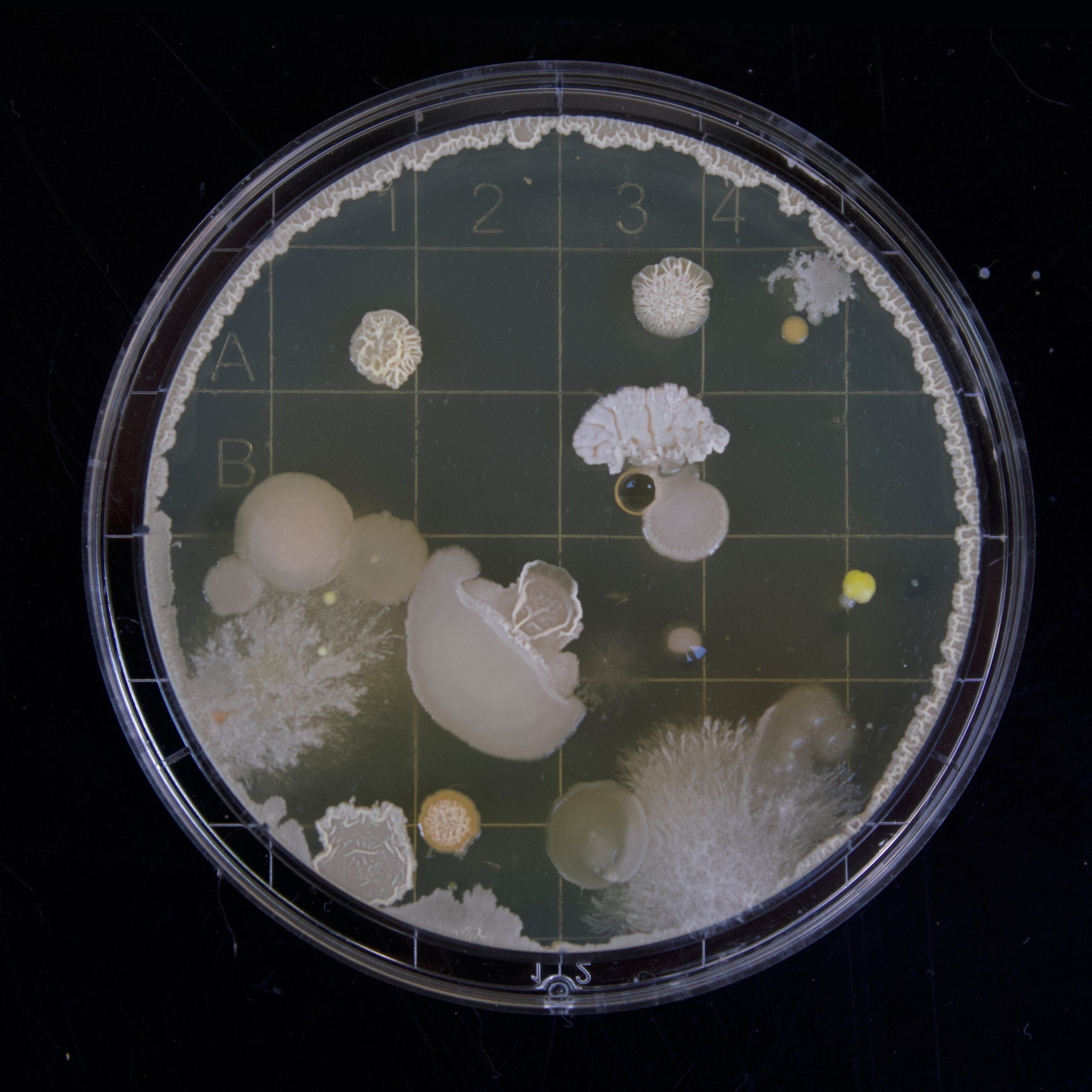
There are trillions of bacteria living in your gut—also known as the gut microbiome. Beneficial bacteria support digestion and immunity, help produce vital vitamins, regulate appetite, and may even reduce depressive symptoms.
Harmful bacteria can disrupt the gut microbiome and contribute to negative health outcomes, including depression. Feeding beneficial bacteria is an important step in supporting a healthy gut and overall mental well-being.
The Western Diet and Gut Health
Many people are familiar with the traditional “Western diet,” which is high in sugary beverages, greasy fried foods, and red meat. Regularly eating this way has been linked to damage of the gut’s protective mucus layer.

The mucus layer helps protect the body from toxins, supports digestion, and maintains a balanced gut microbiome. When this layer is compromised, its function is reduced and bacteria may penetrate the lining, triggering inflammation and infection.
Inflammation in the gut has been directly linked to several health concerns, including depression and anxiety.
A more balanced diet—one rich in vegetables, fruits, whole grains, lean proteins, and healthy fats—supports beneficial gut bacteria. These bacteria help metabolize fiber into short-chain fatty acids, which can lower inflammation throughout the body.
Over time, this may help reduce symptoms of depression and anxiety. The Mediterranean diet is one example of a pattern that supports gut and mental health.
The Link Between Sugar, Inflammation and Mental Health
Eating excess sugar and processed foods can increase inflammation in the body. Over time, this inflammation has been linked to health concerns such as depression.
Chronic inflammation triggers the release of inflammatory cytokines—molecules that signal the immune system. These cytokines can interfere with neurotransmitters like serotonin and dopamine and disrupt the body’s ability to regulate stress.
High-sugar diets can also cause blood sugar fluctuations, leading to symptoms that may feel similar to anxiety or panic. These can include irritability, fatigue, restlessness, and brain fog.
Shifting away from a diet high in sugar, trans fats, and saturated fats—such as the Western diet—can support both gut and mental health. A more nutrient-dense eating pattern rich in fiber, lean protein, and unsaturated fats, like the Mediterranean diet, may help reduce inflammation.
The Mediterranean Diet: A Practical Approach
Now that we understand what the Mediterranean diet is, let’s look at practical ways to introduce it into everyday life. There are a few general guidelines to keep in mind:
- Eat fruits, vegetables, whole grains, and extra virgin olive oil at most meals
- Include fatty fish, nuts, and legumes in at least three meals per week
- Limit poultry, low-fat dairy, and eggs to one serving per day
- Limit red meat and sweets to one serving per week
When transitioning to this way of eating, there’s no need to be “cookie cutter.” The goal is to create a lifestyle, not follow a rigid diet.
Start by making small, gradual changes—adding one nutritious choice at a time—to build habits that feel sustainable and realistic.
Below are a few example meals to help you get started.
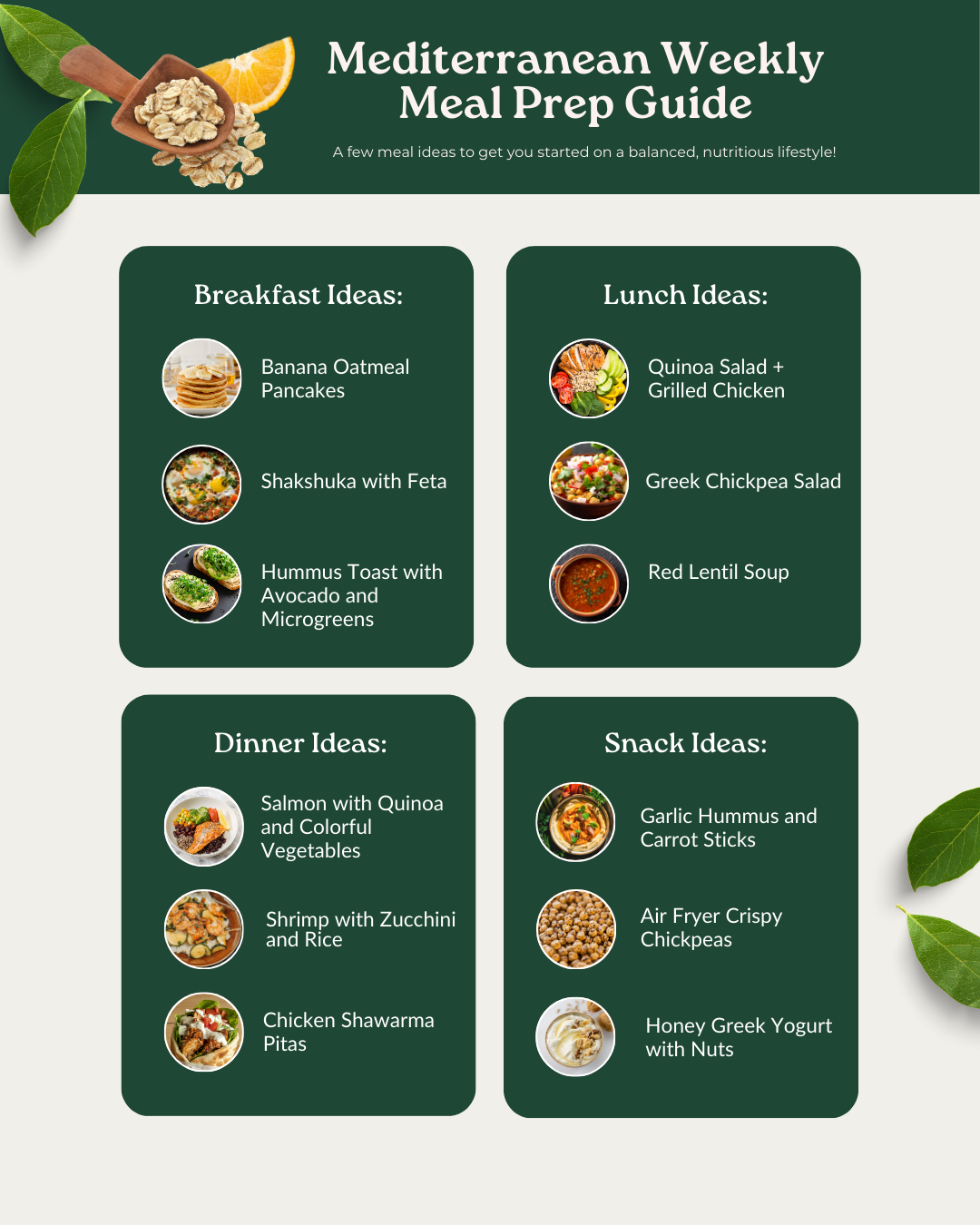
Sample Mediterranean-style meals to support gut health and reduce inflammation.
Prebiotics and Probiotics: Fueling the Gut-Brain Connection
In addition to following a Mediterranean-style diet, incorporating probiotics and prebiotics may help support the gut–brain connection and reduce inflammation. Research suggests they may also help alleviate symptoms of anxiety and depression.
Probiotics are live bacteria found in certain foods that support digestion and help maintain a healthy balance of gut bacteria. When shopping, look for refrigerated fermented foods, as they are more likely to contain active cultures. Examples include:
- Kimchi
- Kefir
- Sauerkraut
- Yogurt
- Miso
- Pickled vegetables
Prebiotics are types of fiber that the body doesn’t digest but that gut bacteria use for fuel. When paired with probiotics, they work together as a powerful team.
Prebiotics help nourish beneficial gut bacteria and support their function. Common prebiotic-rich foods include:
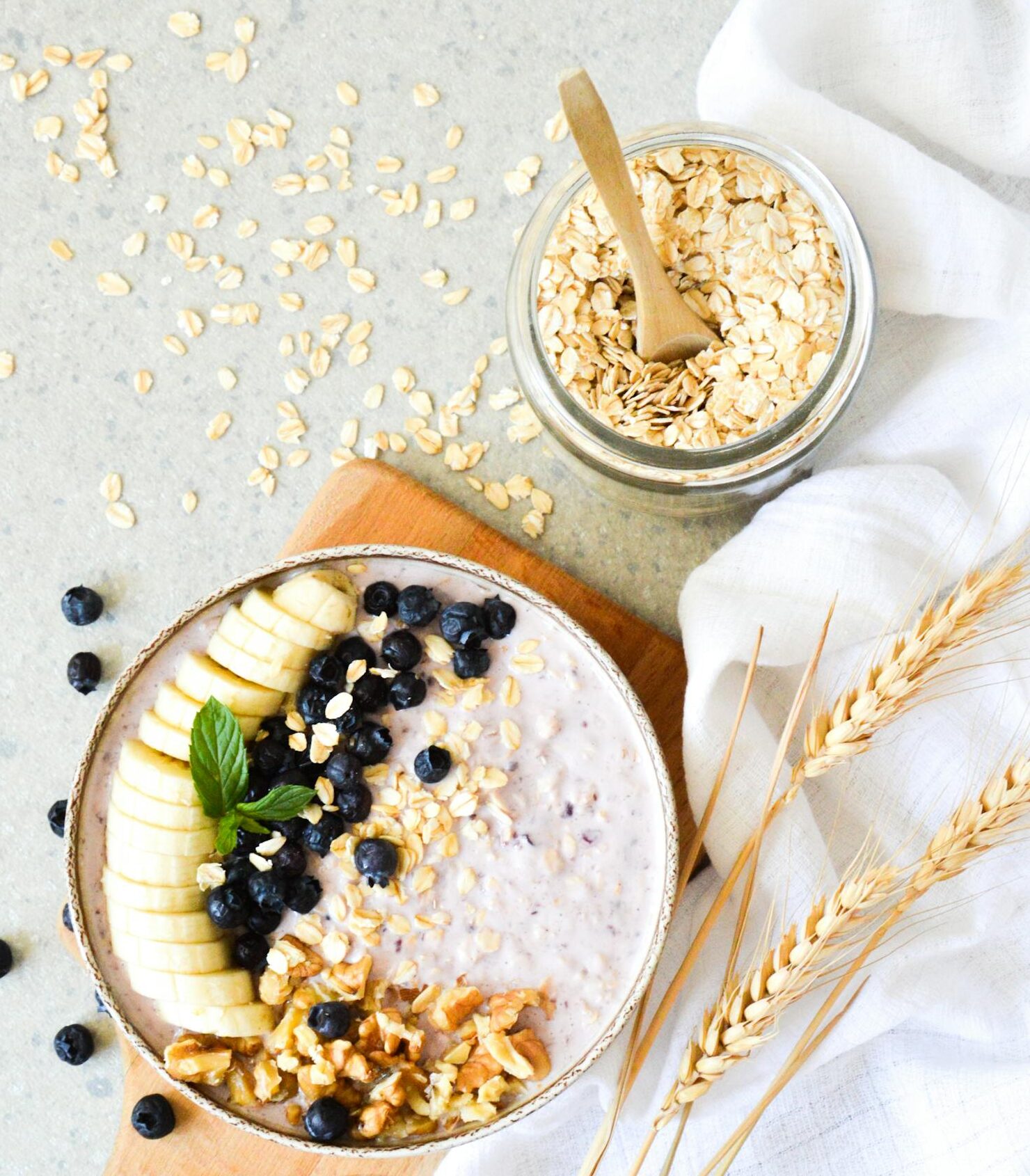
- Bananas
- Oats
- Onions
- Garlic
- Leeks
- Apples
- Asparagus
- Berries
- Legumes, beans and peas
The brain is powerful, and it deserves nourishment that supports cognitive function, mood, and stress regulation. Prioritizing whole foods, incorporating prebiotics and probiotics, and limiting refined sugar and highly processed foods can help fuel the body and mind to feel more energized each day.
You are worthy of a life filled with joy, connection, and clarity. Nourishing your body—and your mind—can be a meaningful place to start. Small, intentional food choices can create powerful shifts over time.
Sources & Further Reading
- Champion, C. (2023, October 23). You are what you eat: Diet may affect your mood and brain function. UCLA Health. https://www.uclahealth.org/news/article/you-are-what-you-eat-diet-may-affect-your-mood and-brain
- Lepisto, C. (2024, March 20). Nourishing the mind: How nutrition fuels brain health – celebrating life community health center. Celebrating Life Community health center -.
https://www.clchc.org/nutrition-for-brain-health/ - Palmer, C. (2022, December 13). Good gut bacteria vs. bad gut bacteria: What’s the difference? – goodrx. GoodRX. https://www.goodrx.com/well-being/gut-health/good-bad-bacteria-gut-health
- Professional, C. C. Medical. (2025, September 11). What is the Mediterranean diet?. Cleveland Clinic. https://my.clevelandclinic.org/health/articles/16037-mediterranean-diet